
Above The Law
Power, Impunity, and the Limits of Legal Order
November 28, 2025

There is a comforting civic mantra: no one is above the law. It is repeated with the same ritualistic confidence as justice is blind and the rules apply equally to all. But these are not descriptions of the world. They are aspirational myths—moral architectures we deploy to obscure a far simpler truth: law binds only where power cannot override it.
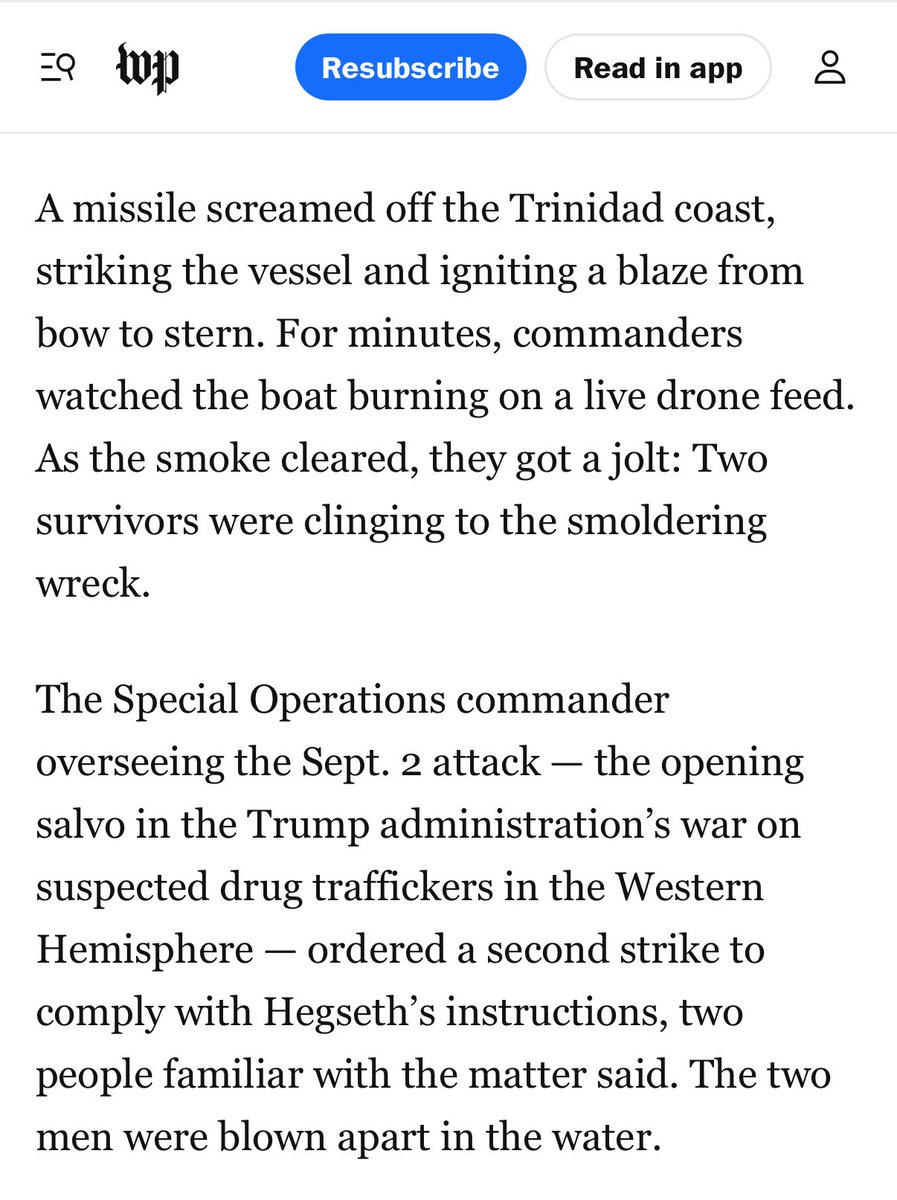
The recent U.S. strike near Trinidad illustrates the point with unusual sharpness. A boat suspected of smuggling drugs was destroyed without warning. When the survivors tried to stay afloat on the wreckage, a second strike killed them as well. There is no plausible legal theory—domestic or international—that can justify either attack. These were intentional killings of civilians outside any armed conflict.
That should trigger investigations, hearings, and formal charges. Instead, it triggers nothing. The event drops out of public consciousness, institutions fall silent, and the machinery of enforcement never engages.
Why? Because the relationship between law and power is not symmetrical.
1. How the Strong Slip the Net
Legal systems depend on something deeper than written rules: the capacity to impose consequences. When an actor’s reach extends beyond the system’s ability to respond, the rules lose operational force.
The U.S. sits precisely in that zone. It possesses veto power over global institutions, refuses the jurisdictions that might hold it accountable, and classifies the evidence that would be needed to test its actions. Even allies who object privately will not challenge it openly, because they rely on American security guarantees and economic influence.
The point isn’t that the rules are unclear. The point is that no institution has the leverage to enforce them upward.
2. Why the Strike Was Always Unaccountable
If a smaller state had carried out the Trinidad attack, the legal process would move predictably: condemnations, resolutions, and possibly referrals to an international court. The conduct itself doesn’t change—only the identity of the actor does.
This exposes an uncomfortable fact: the global order treats law as a gravity field that weakens with altitude. Small and medium powers orbit within it. Hegemons drift beyond its pull.
Once you recognize this, the silence surrounding the strike is no longer surprising. It is the expected consequence of a system calibrated to control most states while leaving a small number functionally exempt.
3. What Law Really Is
Axio interprets law as a coordination technology, not a moral guarantee. It works only when agents stand in roughly balanced positions relative to one another. When one actor becomes capable of projecting force without fear of reprisal, coordination collapses. The rule-set remains written, but the enforcement circuits are dead.
Under this lens, the U.S. does not violate the law in the naive sense—it operates outside the law’s effective domain. The rules are still articulated, but the system lacks the agency to apply them upward.
This is not an anomaly. It is how the current order is built.
4. The Information Hidden in Impunity
Instead of treating impunity as a moral outrage, Axio treats it as a diagnostic. It reveals:
where enforcement capacity stops
where coercive authority escapes feedback
where institutional constraints are too weak to shape behavior
where future harms accumulate because no corrective force exists
The lesson isn’t that the world is unjust—though it is—but that our political architecture concentrates power faster than it distributes responsibility.
The Real Meaning of “Above the Law”
The phrase doesn’t denote privilege; it denotes a structural position. It identifies points in the geopolitical landscape where reciprocal constraints cannot reach. The Trinidad strike makes that topology visible: an actor with overwhelming reach acting in a space where no mechanism can impose consequences.
The remedy is not moral appeal but architectural change: political systems built so that no concentration of power can detach itself from consequence, and where reciprocal constraint operates as an inevitability rather than an aspiration.