
The Poverty Myth
Why Capitalism Did Not Create Poverty but Made Its Escape Possible
October 03, 2025
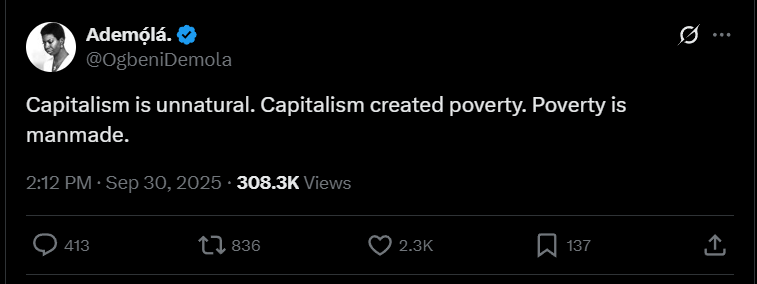
“Capitalism is unnatural. Capitalism created poverty. Poverty is manmade.” — A viral tweet
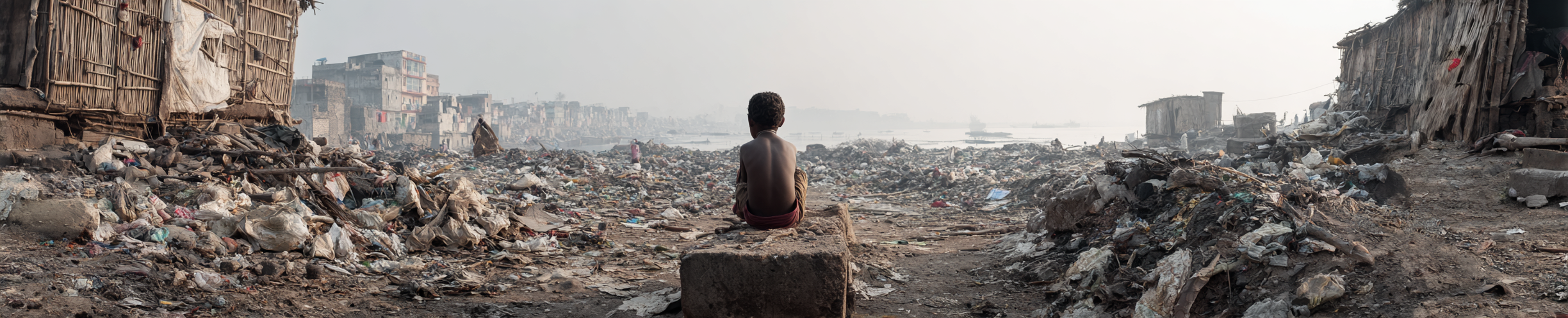
This is the kind of statement that makes you wonder whether people’s intuitions have been so warped by abundance that they can no longer remember reality. It is not just wrong, it is an inversion of truth. The very comforts that make it possible for someone to fire off such a glib pronouncement are themselves the products of the system he condemns.
Poverty Is the Default
Poverty is not “man-made.” Poverty is what you get when nothing is made. It is the baseline condition of nature. Our ancestors lived short, brutal lives punctuated by disease, famine, and cold. Infant mortality was staggering. Life expectancy hovered in the thirties. That was not a deviation—that was the rule.
You don’t need to explain poverty. It is what you get by default. What needs explaining is prosperity.
Wealth Is the Human Achievement
Wealth is the anomaly, the fragile exception carved out of chaos by ingenuity. It emerges when humans invent, accumulate capital, trade, and specialize. It is not a given. It is an achievement.
Capitalism did not create poverty. Capitalism created the mechanisms by which human beings could escape it.
History Is Brutally Clear
In 1820, more than 90% of humanity lived in what we would today call extreme poverty.
Today, fewer than 9% do—and the number continues to fall.
That is not correlation. It is causation. Where markets and property rights took root, poverty receded. Where they did not, poverty persisted. The wealth of nations was not delivered by kings or commissars. It was delivered by free exchange.
To say capitalism created poverty is like saying medicine created disease, or fire created cold.
The “Unnatural” Ruse
Calling capitalism “unnatural” is semantic camouflage. Markets are emergent human behavior. Hunter-gatherers bartered. Ancient tribes exchanged surpluses. Comparative advantage is as real and spontaneous as language. What is truly unnatural is the attempt to abolish voluntary exchange and replace it with command. That is what required gulags, famine quotas, and firing squads.
The Great Inversion
The tweet inverts reality with the elegance of a Möbius strip:
Claim: Capitalism created poverty.
Truth: Capitalism created prosperity. Poverty is older than civilization.Claim: Poverty is man-made.
Truth: Poverty is nature-made. Wealth is man-made.
What actually entrenched poverty were feudalism, slavery, and collectivist command economies. Capitalism was the solvent that broke those structures apart.
Why the Myth Persists
The myth survives because:
Prosperity is now so ubiquitous that people treat it as the baseline.
They confuse inequality with poverty.
They find markets aesthetically distasteful—competition, inequality, profit—and therefore vilify them.
But this is self-indulgent amnesia. The smartphone in their hand, the antibiotics in their body, the food flown in from another continent—none of it would exist without capitalism.
The Savage Truth
Capitalism didn’t create poverty. Poverty is the state of nature. Capitalism created the miracle of wealth. Every critic who types their disdain into a phone while enjoying heat, light, medicine, and decades of life their ancestors could never dream of—they are walking monuments to capitalism’s triumph.
To sneer at capitalism is not merely ungrateful. It is historically blind, economically illiterate, and morally perverse.