
Entangled Truths
Why Leibniz’s necessary/contingent divide collapses under Conditionalism
September 20, 2025
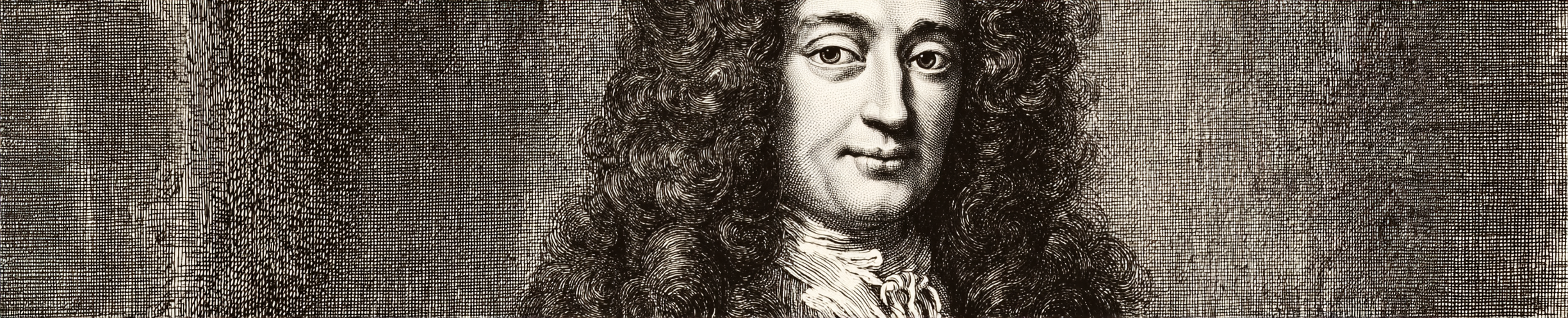
“There are two kinds of truths: those of reasoning and those of fact. The truths of reasoning are necessary and their opposite is impossible; the truths of fact are contingent and their opposites are possible.” — Gottfried Leibniz
1. Leibniz’s Taxonomy of Truth
Leibniz distinguished sharply between two domains:
Truths of Reasoning: Necessary truths, typically mathematical or logical, whose negations entail contradiction. Example: 2+2=4.
Truths of Fact: Contingent truths, empirical statements about the world, whose negations are logically possible. Example: It rained in Paris yesterday.
Behind this taxonomy lie two principles:
Principle of Non-Contradiction: The ground of necessity; no necessary truth can be denied without incoherence.
Principle of Sufficient Reason: The ground of contingency; every fact has an explanation, yet things might have been otherwise.
This bifurcation provided early modern philosophy with a framework to navigate the boundary between mathematics and empirical science. But from a Conditionalist standpoint, it is an illusion born of categorical rigidity.
2. Conditionalism: The Recasting of Truth
Conditionalism holds that all truths are conditional statements: they take the form If X, then Y. There are no unconditional truths; all truth depends on background conditions, many of which remain hidden.
2.1 Reasoning as Framework-Dependent
Take Leibniz’s “necessary” truths:
2+2=4 becomes: If one accepts Peano arithmetic and Indo-Arabic numerals, then 2+2=4.
¬(P ∧ ¬P) becomes: If one adopts classical logic, then contradictions are excluded.
What Leibniz called “necessary” rests on historical contingencies:
Notation: Numerals and symbols are cultural inventions.
Definition: Equality, addition, and logical connectives are introduced by stipulation.
Inference: Rules vary across systems—classical, intuitionistic, paraconsistent, quantum.
Thus, necessity is not absolute but framework-relative necessity.
2.2 Facts as Coherence-Dependent
Now consider contingent truths:
It rained in Paris yesterday becomes: If these meteorological and historical conditions obtained, then it rained in Paris yesterday.
Yet facts themselves presuppose logical structure:
Syntax and semantics: Without a logical-linguistic system, the statement collapses into noise.
Consistency filter: Self-contradictory claims cannot be admitted as facts.
Inferential role: Empirical claims gain force only when they cohere with other claims in networks of reasoning.
Thus, contingency is not free-floating but coherence-dependent contingency.
3. Cross-Dependency: The Entanglement of Logic and Fact
Conditionalism reveals a deep symmetry:
Reasoning rests on empirical substrate: Notations, definitions, and rules emerge historically and are stabilized socially.
Fact rests on logical substrate: Empirical claims require logical form to be intelligible and testable.
Leibniz saw a boundary; Conditionalism sees a braid. Each domain secretly leans on the other for its very intelligibility.
4. The Collapse of the Dichotomy
The sharp opposition of necessary vs. contingent is dissolved. What remains is a continuum of conditional stability:
Some conditionals are highly stable because they rest on entrenched conventions (mathematics, formal logic).
Others are fragile, dependent on volatile background conditions (weather, politics, history).
The distinction is one of degree, not kind. There are no unconditional truths—only conditionals with varying degrees of stability and dependence.
5. Implications for Philosophy
Epistemology: What Leibniz took as two kinds of truth are revealed as two poles on a spectrum of conditionality.
Philosophy of Science: Scientific laws resemble mathematical truths insofar as they are stable conditionals anchored in measurement and modeling conventions.
Metaphysics: The pursuit of absolute necessity is misguided. What we call “necessary” is merely the upper limit of conditional robustness.
Conclusion
Leibniz, in his brilliance, gave us a conceptual map that helped structure Enlightenment thought. But his division of truths into reasoning and fact is revealed, through Conditionalism, to be an artifact of mistaken absolutism. All truths are conditional. Some lean more heavily on empirical substrate, others on logical coherence, but neither is free of dependency. What Leibniz mistook for a chasm is, in fact, a Möbius strip: reasoning and fact twisting into one another, inseparable, conditional all the way down.