
The Myth of Underprovision
How the "Public Goods Problem" Smuggles in Statism
August 31, 2025
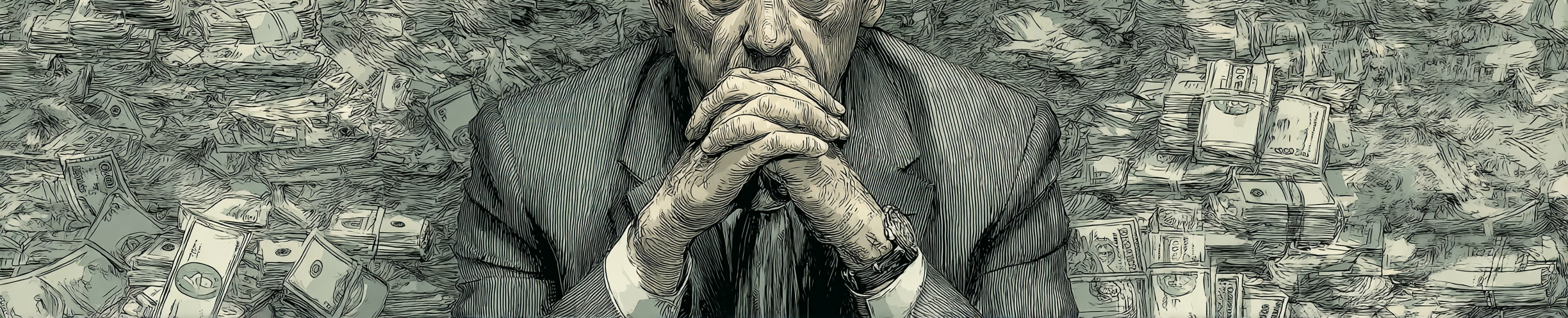
Every economics undergraduate learns the mantra: markets underprovide public goods. The reasoning seems airtight:
Public goods are defined as non-rivalrous (my consumption doesn’t diminish yours) and non-excludable (you can’t stop non-payers).
If you can’t exclude non-payers, people free ride.
If people free ride, private actors won’t fund enough.
Therefore, coercive taxation is justified to “fix” the underprovision.
That’s the standard narrative, drilled in as orthodoxy.
Where the Claim Really Comes From
The claim isn’t an empirical discovery. It is the output of a model that assumes:
No way to exclude non-payers exists or could evolve.
Voluntary cooperation is insufficient at scale.
A central planner knows the “optimal” level of provision.
In other words, the inevitability of the state is baked in from the start.
History Doesn’t Agree
The real record of human societies tells a different story:
Lighthouses in Britain were privately built and funded by port fees until the state nationalized them.
Roads and bridges were historically toll-based, privately maintained turnpikes.
Education flourished through churches, guilds, and subscription schools long before government monopolies.
Law and order in frontier zones and medieval Iceland emerged from voluntary associations and competing legal systems.
Scientific discovery has been propelled by prizes, patrons, and voluntary societies.
Far from being anomalies, these examples illustrate how people consistently solve so-called public goods problems without the state.
The Sleight of Hand
When economists say “underprovide,” they mean: less than the quantity a planner’s social welfare function demands. This is not objective analysis. It is a political judgment smuggled in under the banner of science. It presumes that “more” is always better, and that coercion has no real cost.
But coercion is never costless. Taxation requires threats. It warps incentives, crowds out alternatives, and entrenches monopolies. The tidy diagram in the economics textbook leaves out the destruction of agency.
What Markets Really Show
Voluntary markets reveal what people actually value enough to pay for. If there’s less of X than a theorist wants, that isn’t “failure.” That’s the truth of preferences. And as technology evolves, the supposed “non-excludability” of public goods erodes—micropayments, contracts, and blockchains make exclusion trivial where it once wasn’t.
What looks like underprovision is usually provision in unfamiliar forms: messy, decentralized, diverse, voluntary. The complaint isn’t about scarcity, it’s about a refusal to conform to the state’s preferred template.
The Anti-Statist Lesson
The marginalist revolution that McCloskey praises already undermines totalist accounting. You can only ever owe at the margin, never for the whole past. Likewise, markets only ever provide at the margin, according to voluntary demand. Labeling that “insufficient” is not economics—it is ideology.
The myth of underprovision is statism’s Trojan horse. Accept it, and you hand the state a blank check. Reject it, and the picture clarifies: there is no “failure” in voluntary cooperation—only the actual arrangements free people choose to build.