
Progressive Hypocrisy
Bernie Sanders’s inequality framing backfires
August 08, 2025

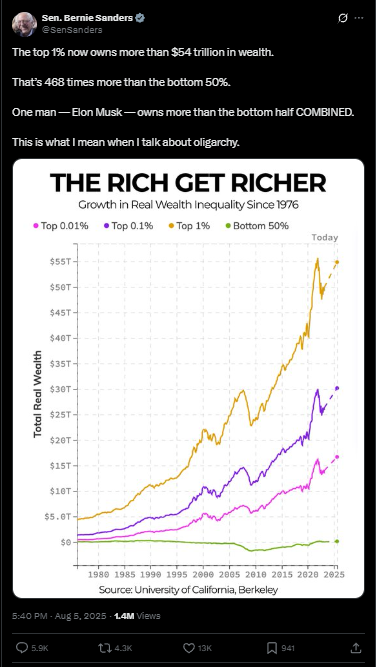
Senator Bernie Sanders recently tweeted that the richest Americans own vastly more wealth than the bottom half of the country, framing it as a sign of systemic injustice. His preferred rhetorical move is to compare a very large positive net worth to the aggregate wealth of a low percentile group—often the “bottom 50%”—to make the disparity sound morally damning. The problem is that by his own logic, Sanders indicts himself.
The Key Fact He Ignores
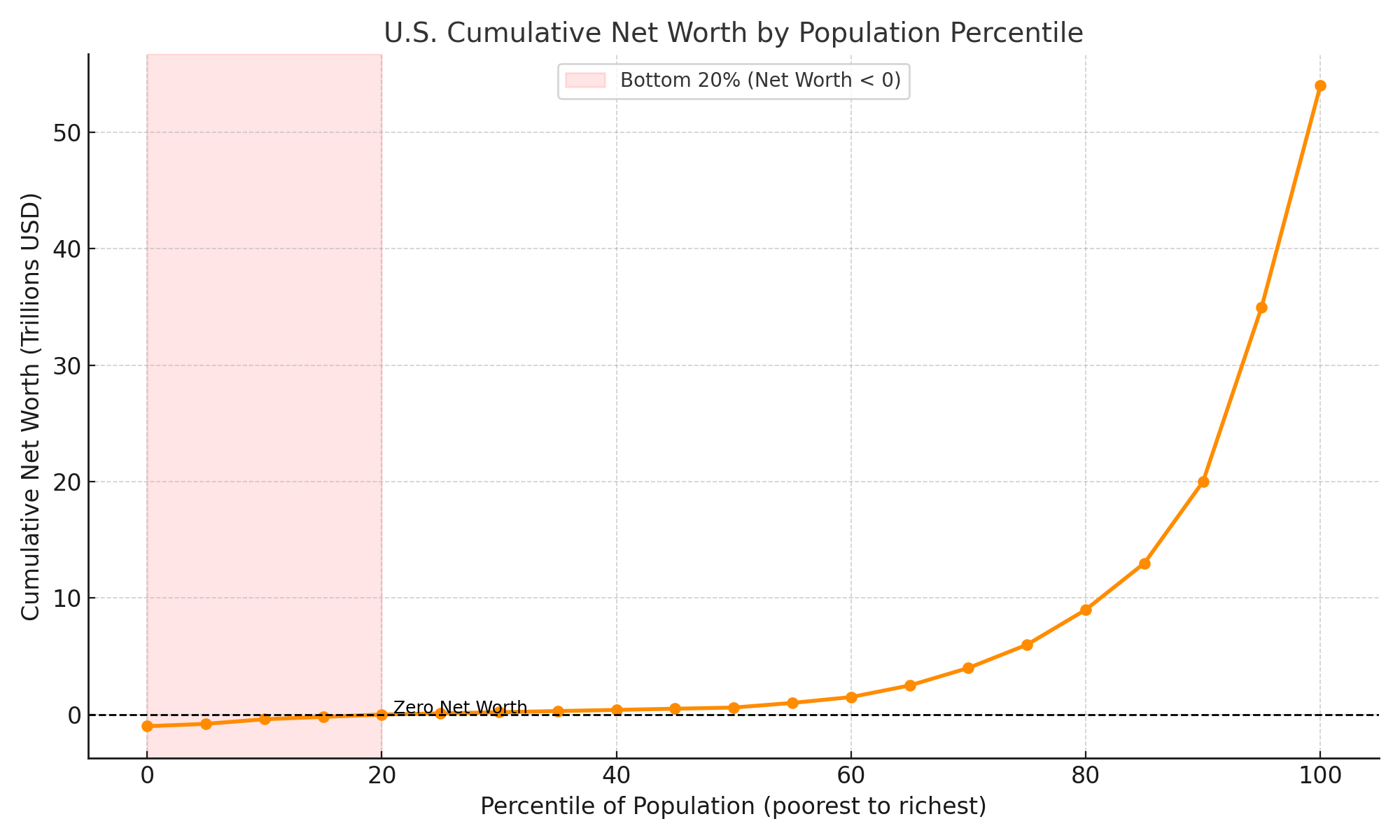
In the U.S., the bottom 20% of Americans have negative combined net worth. Debt outweighs assets in aggregate, largely due to student loans, mortgages, and other liabilities.
This means anyone with a positive net worth automatically has more wealth than the bottom 20% combined. Bernie Sanders, with an estimated personal net worth of $2–3 million, easily qualifies.
The Hypocrisy
When Sanders claims it’s morally problematic that Elon Musk has more than the bottom 50%, he is using a statistical artifact to frame wealth disparity as injustice. By the same logic, Sanders—comfortably in the top few percent by net worth—has more than the bottom 20% combined. The exact same argument could be turned against him.
Why This Matters
Inequality in itself is not a problem. Disparity of outcomes is not evidence of harm unless it results from coercion, fraud, or policies that reduce individual agency. The comparison is misleading because:
The bottom segments include many people temporarily in debt due to education or home purchases.
Negative net worth in wealthy economies often reflects financial leverage and opportunity, not deprivation.
Without context, these comparisons distort the real picture.
The Logical Reversal
If Sanders applies this metric to others, consistency demands he apply it to himself. If he rejects that, he undermines the validity of the comparison entirely.
Conclusion
Sanders’s tweet is misleading on its own terms and exposes a contradiction in his rhetoric. His personal wealth places him far above millions of Americans in precisely the way he criticizes others for. The real issue is not inequality itself but the misuse of statistics to imply harm where none is inherently present.